
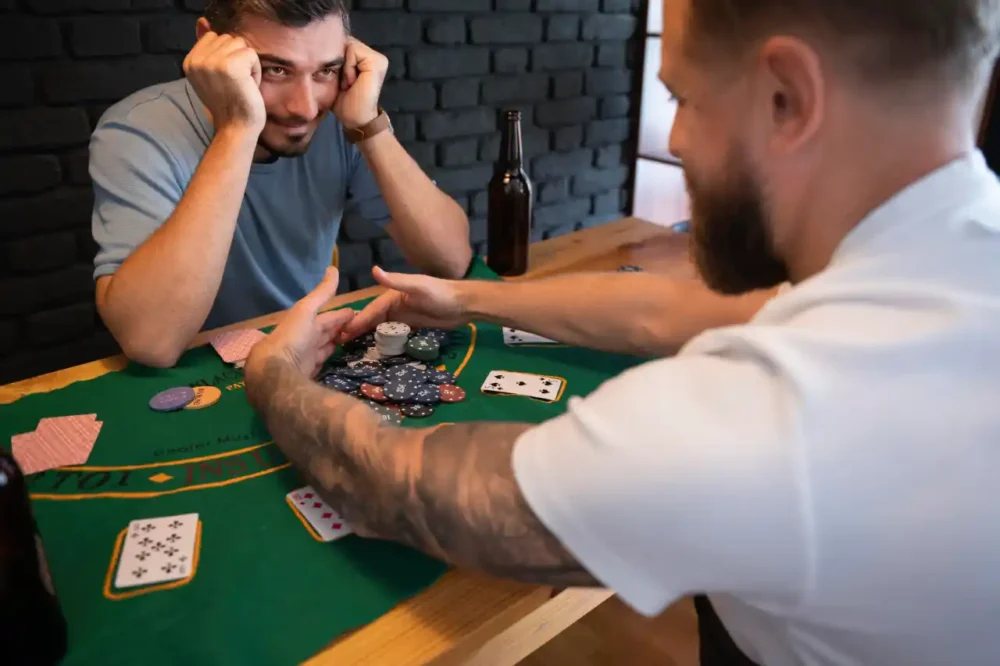
Walk into any casino and you’ll hear two types of players. Some swear their strategies give them an edge. Others believe everything comes down to pure chance. The truth sits somewhere in between, and understanding this difference affects your wallet and your experience.
While you can’t control the cards that come out of the deck or where the roulette ball lands, you do control how you play those cards and whether you even sit down at that roulette table. Your decisions about which games to play, how much to bet, and when to fold or hit matter more in some games than others. This difference separates games where your choices actually impact outcomes from games where you’re just along for the ride.
Most players don’t know which parts of their casino experience they actually control. They waste time on strategies that don’t work or give up on games where skill could help them. This guide breaks down what you can and can’t influence, which games reward your decisions, and what beliefs about control are simply wrong.
Fundamentals of Skill and Luck in Casino Games
Casino games exist on a spectrum where some outcomes depend entirely on random chance while others reward player decisions and strategy. The house maintains a mathematical advantage across all games, but the degree to which you can influence results varies significantly between different types of gambling.
Defining Skill in the Casino Context
Skill in casino games means making decisions that mathematically improve your expected outcomes. This includes knowing when to hit or stand in blackjack, which cards to hold in video poker, or reading opponents in poker.
Your skills develop through study and practice. Learning basic blackjack strategy reduces the house edge from around 2% to 0.5%. In poker, skilled players consistently win against weaker opponents because they make better decisions about betting, folding, and reading situations.
Key skillful actions include:
- Memorizing optimal strategy charts
- Calculating pot odds and probabilities
- Managing your bankroll effectively
- Recognizing patterns in opponent behavior
- Knowing when to quit
The impact of skill varies by game. Poker rewards skill heavily because you play against other people. Blackjack allows skill but you still face a house edge. Slots offer no skill component at all.
Understanding the Role of Chance
Chance refers to outcomes you cannot control or predict. Random number generators determine slot results. The shuffle of cards creates unpredictable situations. The ball landing on red or black in roulette happens independently of your wishes.
Even in skill-based games, luck plays a major role in short-term results. You can make perfect blackjack decisions and still lose ten hands in a row. A poker professional might get eliminated from a tournament on an unlucky river card.
The law of large numbers means luck evens out over time. Play 10 hands of blackjack and anything can happen. Play 10,000 hands with proper strategy and your results will closely match mathematical expectations.
House Edge and Game Mechanics
The house edge is the casino’s built-in mathematical advantage expressed as a percentage. This number tells you how much the casino expects to keep from your total bets over time.
Different games have vastly different house edges:
| Game | House Edge |
|---|---|
| Blackjack (basic strategy) | 0.5% |
| Craps (pass line) | 1.41% |
| Roulette (double zero) | 5.26% |
| Slots | 2-15% |
| Keno | 25-40% |
Game mechanics determine how much control you have. Blackjack lets you choose actions after seeing your cards and the dealer’s upcard. Roulette gives you no choices after placing your bet. Video poker requires you to select which cards to keep, directly affecting your odds.
The house edge exists regardless of skill level. Even perfect play in blackjack leaves the casino with a 0.5% advantage. Your skill can minimize this edge but never eliminate it completely.
Player Influence: What You Can Control
While casino games involve varying degrees of chance, you control several factors that directly impact your results. Your choices in strategy, money management, and game selection determine how effectively you play within the boundaries of each game’s rules.
Strategic Decision-Making in Table Games
Your decisions at the table matter most in games like blackjack and poker. In blackjack, you choose whether to hit, stand, double down, or split based on your cards and the dealer’s visible card. Using basic strategy charts reduces the house edge to around 0.5%, compared to 2-4% for players who guess.
Poker offers even more control since you play against other players instead of the house. You decide which hands to play, when to bet or fold, and how much to risk. Reading opponents and adjusting your play style based on table dynamics falls entirely under your control.
In baccarat, your strategic options are limited to betting on player, banker, or tie. The banker bet carries a house edge of 1.06%, while the tie bet jumps to over 14%. This simple choice significantly affects your long-term results.
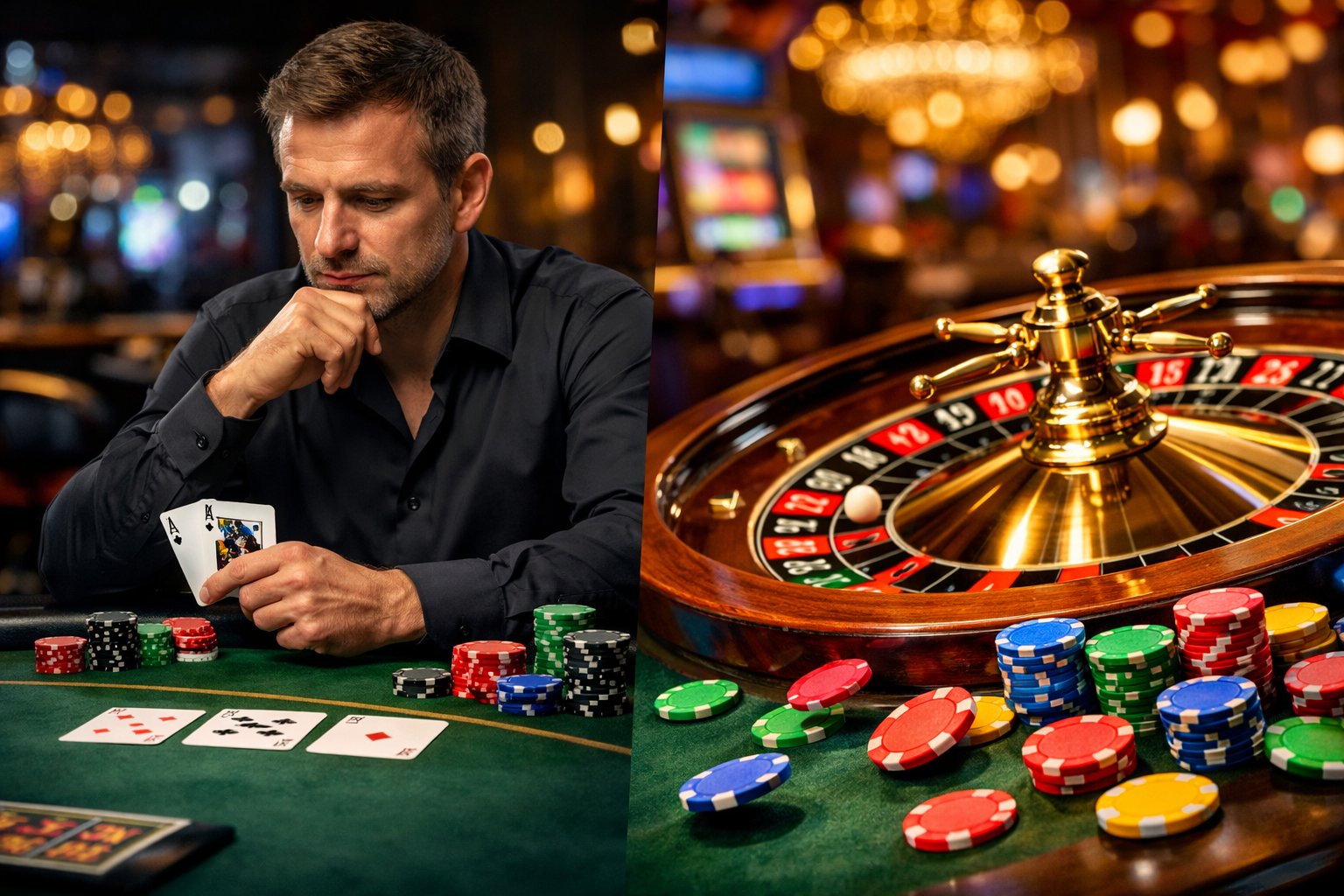
Games where strategy matters:
- Blackjack (basic strategy)
- Poker (all variants)
- Video poker (optimal play charts)
- Craps (bet selection)
Bankroll Management Techniques
How you manage your money affects how long you play and your risk of significant losses. Setting a budget before you start and sticking to it prevents emotional decisions during losing streaks.
Your bet sizing relative to your total bankroll determines your risk level. Betting 1-2% of your bankroll per hand or spin gives you staying power through normal variance. Larger bets risk burning through your funds quickly.
You control when to walk away. Setting win and loss limits creates clear exit points. If you decide to stop after losing $200 or winning $500, you remove emotion from the equation.
Time limits work alongside money limits. Deciding to play for only one or two hours helps prevent fatigue, which leads to poor decisions.
Selecting the Right Games
You choose which games to play, and this decision dramatically impacts your expected results. Games have different house edges that directly affect your chances over time.
Blackjack with favorable rules (3:2 payouts, dealer stands on soft 17) gives you better odds than 6:5 blackjack tables. Checking the rules before sitting down is entirely your choice. European roulette has one zero and a 2.7% house edge, while American roulette adds a double zero and increases the edge to 5.26%.
House edges by game:
| Game | House Edge |
|---|---|
| Blackjack (basic strategy) | 0.5% |
| Craps (pass/don’t pass) | 1.4% |
| Baccarat (banker) | 1.06% |
| European Roulette | 2.7% |
| Slots | 2-15% |
| Keno | 25-40% |
You also control whether you learn the game before playing with real money. Free versions and practice modes let you understand rules and test strategies without financial risk.
Games Dominated by Skill Versus Those Driven by Luck
Casino games fall into distinct categories based on how much control you have over the outcome. Some games reward your decisions and strategies, while others depend entirely on random chance.
Skill-Based Casino Games
Poker stands out as the most skill-dependent casino game. Your ability to read opponents, manage your bankroll, and make strategic decisions directly impacts your results. Professional poker players consistently win because they master probability calculations and psychological tactics.
Blackjack gives you significant control through basic strategy. When you learn the mathematically correct decision for every possible hand, you can reduce the house edge to less than 1%. Card counting adds another layer of skill, though casinos prohibit this practice.
Sports betting rewards research and analysis. You can gain an edge by studying team statistics, injury reports, and betting market inefficiencies. Successful sports bettors treat it like a job, spending hours analyzing data.
These games require practice and study. Your decisions matter in every hand or bet you make.
Luck-Driven Games
Slot machines operate on random number generators. You cannot influence the outcome through any action or decision. Each spin is independent, and the machine follows pre-programmed odds.
Roulette offers zero skill component. The ball lands randomly on each spin. No betting system or pattern recognition changes your odds.
Lottery games rely purely on chance. You pick numbers and hope they match the draw. The odds remain astronomical regardless of which numbers you choose.
Craps outcomes depend entirely on dice rolls. While you can choose different bets with varying house edges, you cannot affect the actual dice results.
These games require no learning curve. Your experience level does not improve your chances of winning.
Hybrid Games with Elements of Both
Video poker combines random card deals with strategic decision-making. The machine deals cards randomly, but you choose which ones to hold. Playing perfect strategy significantly improves your return compared to random choices.
Baccarat involves minimal decisions but allows you to choose between banker, player, or tie bets. The banker bet carries a lower house edge, so this choice matters. However, the cards fall randomly after you place your bet.
Pai Gow Poker requires you to arrange seven cards into two poker hands. The initial deal is random, but how you set your hands affects your winning chances. Good players lose less money over time through optimal hand arrangement.
Common Misconceptions About Control in Gambling
Many players believe they can influence random outcomes through specific actions or patterns, when in reality most casino games operate on pure chance. These false beliefs create a sense of control that doesn’t actually exist and can lead to poor decisions at the tables.
The Illusion of Control
You might feel like you have more influence over game outcomes than you actually do. This happens when you confuse your ability to make decisions with the power to affect random results.
In games like slots or roulette, you can choose when to spin or where to place your bet. However, these choices don’t change the odds or influence what happens next. The outcome is already determined by random number generators or physics.
Players often think they can develop a “feel” for when a machine will pay out or when their number will hit. This belief keeps people playing longer than they should. Your brain looks for patterns even when none exist, making you think you’re getting better at predicting results.
Common examples of illusory control:
- Pressing the spin button at specific times
- Using particular betting sequences
- Switching machines after losses
- Believing you’re “due” for a win
The Role of Superstition
Superstitions give you a false sense that certain rituals or objects can change your luck. Many players follow specific routines before placing bets or wear lucky items to the casino.
You might blow on dice, touch the screen a certain way, or avoid specific seat numbers. Some players refuse to count their chips during play or insist on using the same dealer. These actions have zero effect on the mathematical probability of any game.
Casinos actually benefit when you believe in superstitions. You stay at tables longer and feel more engaged with the games. Your emotional investment increases, but your actual control over outcomes remains exactly the same.
Persistence of Gambler’s Fallacy
The gambler’s fallacy makes you think past results affect future outcomes in independent events. If red comes up five times in roulette, you might believe black is “due” to appear next.
Each spin of the wheel is completely separate from the last one. The wheel has no memory of previous results. Your chances of hitting red or black stay at roughly 47.4% every single time (accounting for the green zero).
This misconception appears in many forms. You might think a slot machine that hasn’t paid out recently is ready to hit. Or you might believe a dice table that’s been hot will continue producing wins. Both thoughts are wrong because each event stands alone with fixed probabilities that never change based on history.